
Shoplift vs. Elevate
A complete comparison for Shopify merchants
Both platforms run A/B tests on Shopify but only one is a true CRO platform. The right choice depends on what you are optimizing.


Trusted by 2,000+ Shopify Plus Brands






The Key Differences At a Glance
Both tools share a similar feature list on the surface. The differences show up in how they handle reliability, reporting depth, and long-term stability.


Test Reliability

Test Reliability

Statistical Reporting
Statistical Reporting

Shopify Partnership
Shopify Partnership


Starting Price
Starting Price
Which Platform Fits Your Situation?
Both platforms are legitimate choices. The right fit depends on where you are in your testing program.
Same Features, Different Depth
Both platforms support template testing, price testing, and Shopify-native editing. A feature checklist makes them look similar.
The more meaningful comparison is what happens beneath the surface: how reliably tests run without intervention, how accurately results are reported, and how much time has been spent solving the edge cases that break tests in real Shopify environments.
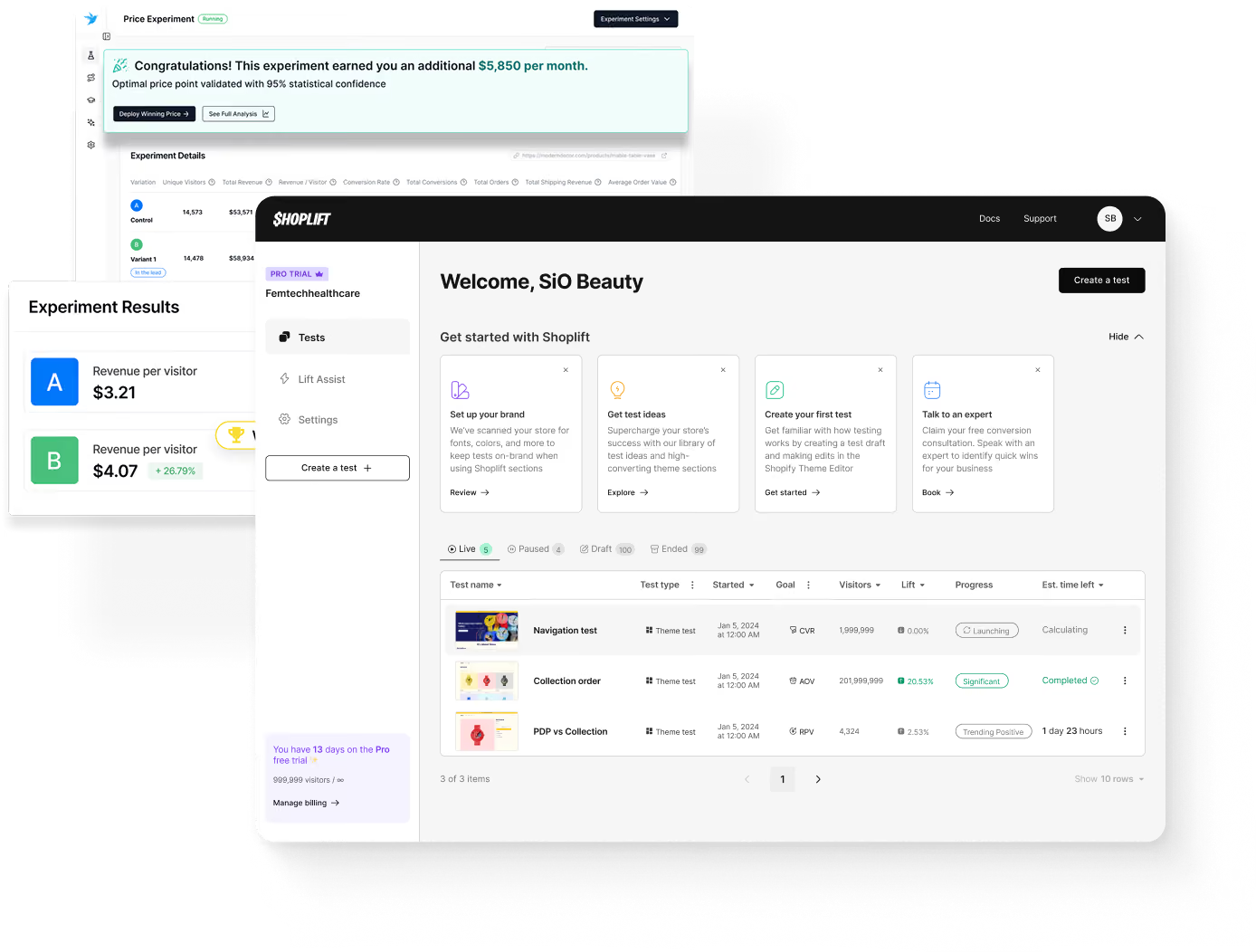
Shoplift Vs. Elevate At a Glance
While the tools have trade-offs, only one was built for scale, speed, and seamlessness in the Shopify Plus ecosystem.


How Real Brands Run CRO in Shoplift
These aren't pilots. Shopify Plus brands run their full CRO programs in Shoplift right now.


“Campaigns gives our team a layer of structure that a flat test list never could. We can now organize experiments around real initiatives, like a PDP overhaul or a homepage redesign, and track progress against those goals. For an agency running testing across multiple clients, that's a meaningful unlock.”


“We've been testing and increasing the price by 10% with really good results. Customers have been converting at their usual rate even with the price increase.”


“Hands down, the best A/B testing app on the market for Shopify. So easy to use, without any setup headaches like you might get with other apps.”
What the Checklist Doesn't Show
A feature match doesn't mean implementation parity. Each section below explains the practical difference behind the checkboxes.
Running tests on a live Shopify store means navigating theme deployments, CDN caching, third-party apps, and browser quirks simultaneously. When these intersect with an active test, results can break silently — and in ways that are hard to detect from the dashboard.
Elevate's public documentation does not describe safeguards for any of these three scenarios. Merchants who have migrated to Shoplift from Elevate have cited reliability — including tests that failed to render correctly after launch and results that shifted after significance was reached — as a primary reason for switching.
How a platform reports results — and when it decides a test is finished — has a direct effect on the quality of the decisions you make from that data.
For DTC brands with subscription products, a test that appears to reduce AOV may actually be driving more first-time subscription conversions — a very different outcome in terms of long-term LTV. Without subscription visibility inside the test report, that distinction gets lost.
Both platforms support price testing. The underlying implementation differs in one important way: how consistent the test price is across all components that display it.
Both platforms support price testing. The underlying implementation differs in one important way: how consistent the test price is across all components that display it.





