


TLDR
The term "UGC app" encompasses three distinct types of apps: apps that put shoppable customer video on your store, apps that collect and display reviews and social galleries, and marketplaces that source brand-new creator video for ads. They don't compete with each other. They sit at different points in the funnel.
Video is the UGC format with the most direct line to conversion right now. 85% of people say a video has convinced them to buy, and 63% would rather learn about a product from a short video than from text, images, or anything else (Wyzowl, 2026). That is why the three shoppable-video apps lead this list.
For on-site video: Videowise, Novel, Hue. For reviews and social galleries: Loox, Okendo, Yotpo, Foursixty. For sourcing creator video: Billo, Insense, Minisocial.
This blog is written for founders, heads of ecommerce, and CRO leads at Shopify and Shopify Plus brands deciding which UGC tool to add, and where it actually pays off.
The Top 10 UGC Apps for Shopify Brands
If you search "UGC app for Shopify," you’ll get a list that quietly mixes three different products together: a $15 review widget and a $3,000 creator campaign, even though they don’t solve the same problem. Some of these tools display content your customers already make. Some collect it. Some pay creators to produce brand-new videos you will never see on your own product pages, because they are built to run as ads. All of it gets filed under "UGC," and picking the wrong category is the most common, and most expensive, mistake we see growth teams make.
Shoplift isn't a UGC app. We build the CRO platform Shopify brands use to find out which on-page changes actually drive revenue, which means we spend our days analyzing how UGC performs once it is live on a product page. Sometimes a video row lifts conversion more than any other test a brand runs that quarter. Sometimes it does nothing, or it slows the page enough to cost more than it earns. The honest version of a list like this ranks tools by what they do to conversion, not by how polished the marketing site looks. That is the lens here.
A quick note on why UGC earns the attention in the first place. In Bazaarvoice's 2024 Shopper Experience Index, a survey of more than 8,000 shoppers, 65% said they rely on user-generated content (ratings, reviews, photos, and videos) when deciding what to buy, and 86% said they engage with creator content before a purchase. The demand is real. The open question is which format and placement earn their keep on your store.
The three kinds of "Shopify UGC app" (and which one you need)
Before comparing prices, sort the tools by the job they do. There are three buckets.
Shoppable video UGC. These apps put customer and creator video directly on your product pages and homepage, with the products tagged so a viewer can watch and add to cart in the same motion. This is the category with the clearest current link to conversion. In Wyzowl's 2026 State of Video Marketing report, 85% of people said a video has convinced them to buy a product, 84% said they want to see more video from brands, and 63% said they would rather learn about a product through a short video than through text articles, images, infographics, or a sales call. Video is also the format shoppers increasingly expect, trained by TikTok and Instagram to swipe through it. Videowise, Novel, and Hue live here.
Reviews, photos, and social galleries. These are the on-site display apps most people picture when they hear "UGC." They send the post-purchase email asking for a photo or review, collect what comes back, and show it as star ratings, photo walls, and shoppable Instagram and TikTok feeds. You already have the customers; this category turns their experience into proof on the page. Loox, Okendo, Yotpo, and Foursixty play here.
Creator-content marketplaces. These connect you to creators who film brand-new branded video for you to run as paid social or organic posts. The output is fresh ad creative, not your existing customers' content. You don't have the video yet; you are commissioning it. Billo, Insense, and Minisocial play here.
The first two buckets work on the traffic you already have. The third manufactures content to win traffic you don't. Most mature brands eventually run a tool from more than one bucket. The waste occurs when a brand pays creator-marketplace prices for a review widget when a review widget was not the actual need, or bolts on a fourth review app when the real gap was video.
The 10 best Shopify UGC apps at a glance
Ratings and review counts are from the Shopify App Store as of June 2026, and they move, so treat them as a snapshot. Tools that are not self-serve Shopify apps (Hue and the three creator marketplaces) are priced by quote or by project, noted in each entry.
How we evaluated these apps
We weighed every app below against the workflow of a growing Shopify Plus brand on five points.
- The job it actually does: Which of the three buckets it belongs in, and how cleanly it does that one thing rather than half-doing three.
- Conversion relevance: Whether the content lands where it can affect a purchase decision (the product page, the cart) rather than only looking good on a marketing page.
- Shopify App Store standing: Current rating and review volume for the native apps, because for a Shopify buyer that is a more honest signal than a score from a different audience. Numbers are as of June 2026.
- Pricing model, not just price: Flat pricing versus order-volume pricing versus impression-based versus per-video, since the model is what bites at scale, not the sticker.
- Page-speed cost: Video and review widgets are heavy. The ones worth running publish how they protect load time, because a slow product page can erase the conversion the content was supposed to create.
One point we keep coming back to is that the lift any of these tools delivers is specific to your store. The same video row that adds double-digit conversion for one brand does nothing for another. Treat the ranking as a starting shortlist, then test the tool on your own traffic before you commit the budget.
Best apps for shoppable video UGC
This is the category with the most direct line to a sale right now, which is why it leads. Shoppers want video, and they buy after watching it. 85% told Wyzowl a video has convinced them to purchase, and a short product video beats every other format when people are deciding what to buy. These three apps put that video on the page, with the product one tap away.
1. Videowise
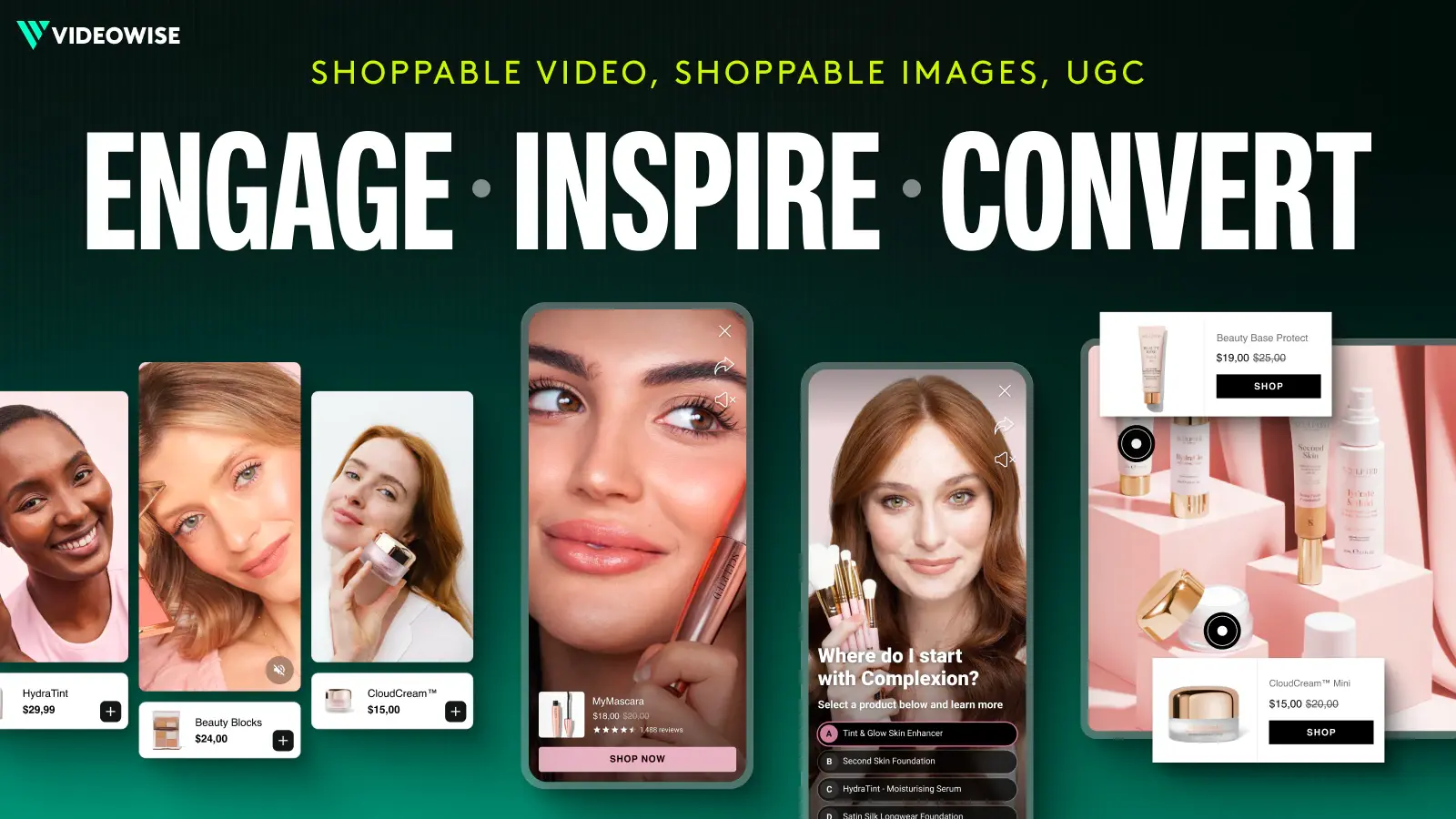
Best for: brands that want shoppable video, live shopping, and UGC infrastructure in one platform built to scale.
Videowise is the most established option in the category, used across more than 4,000 brands on Shopify and other platforms. It imports video from TikTok, Instagram, and YouTube, turns it into shoppable widgets (sliders, galleries, stories, PDP video), and is built around keeping page speed intact while video loads. It holds a 4.7 rating across roughly 246 Shopify App Store reviews, and beauty, fitness, and apparel brands make up the bulk of its install base. It also includes its own A/B testing for video widgets, which signals a team that takes the measurement problem seriously.
Pricing: A free tier exists; paid plans start at $9/mo and scale up with usage and features.
What works
- Deep feature set: shoppable video, live shopping, video quizzes, and email video in one place.
- Built for performance, with heavy optimization so video does not tank load time.
- Broad import options and more than 20 widget types to fit most page layouts.
What doesn't
- The breadth can be more than a brand that only wants a simple PDP video row needs.
- At scale, the full platform sits at the higher end of the category on price.
Why it ranks first: For a brand that wants video to be a real channel rather than a single widget, Videowise covers the most ground and has the install base and maturity to back it. It is the safe scale pick.
2. Novel
webp.webp)
Best for: brands that want a clean, fast shoppable-video widget live quickly, without a heavy platform.
Novel (acquired by PartnrUP) does one thing and does it well: it embeds shoppable video on any page of your store and on the Shop App feed, with layouts you can style to match your brand rather than the app's. You import from TikTok and Instagram or upload directly, tag products, and publish. It carries a 5.0 rating on the Shopify App Store, though across a small review base (around 38), which fits its profile as a newer, design-led tool rather than a sprawling platform. Merchants single out the look of the widgets and the responsiveness of the team.
Pricing: From $14.99/mo on the Starter plan, billed by monthly video impressions, with a Growth plan at $99/mo for higher volume.
What works
- Genuinely fast to set up, with widgets that look custom out of the box.
- Impression-based pricing that is cheap to start and easy to predict at low volume.
- Publishes to the Shop App feed as an extra surface for the same content.
What doesn't
- A smaller, younger platform, so fewer advanced features than the category's heavyweights.
- Impression-based pricing can climb on high-traffic pages, so watch the overage rate.
Why it ranks second: When the job is a clean, conversion-focused video row on a few key pages and not a full video-commerce stack, Novel is the lighter, faster choice. It ranks just behind Videowise on breadth, not on craft.
3. Hue
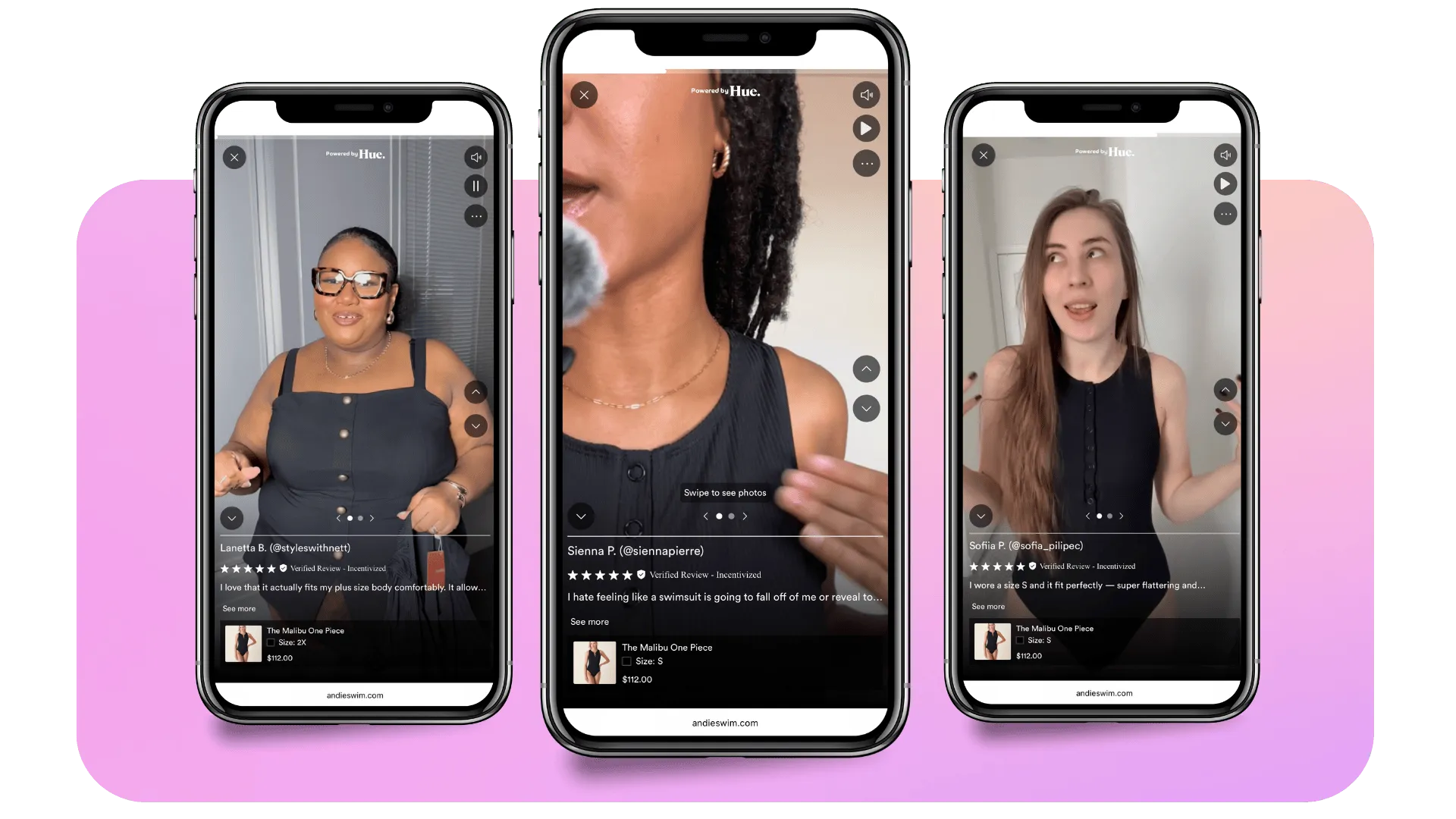
Best for: beauty, skincare, and haircare brands that want creator-sourced UGC video without producing it themselves.
Hue is the one tool in this category that solves sourcing and display together. It pairs you with creators from its vetted community who match your actual customer (skin tone, skin type, hair type, and so on), has them produce 30-to-60-second video reviews and before-and-after content, then embeds that as shoppable video on your product pages. The representation angle is the point: a shopper sees honest video from someone who looks like them, which is a strong trust signal in categories where fit and results vary by person. Hue runs as a managed platform rather than a self-serve app, with partners concentrated in beauty and skincare.
Pricing: Custom, by demo. Hue is a managed service, so cost depends on scope rather than a public monthly plan.
What works
- Sourcing and display in one: you get authentic creator video and the on-site widget to show it.
- Creator matching by physical attributes, a real differentiator for beauty and skincare.
- Content you can repurpose across ads, email, and social, not just the product page.
What doesn't
- The beauty and skincare focus makes it a narrower fit for other categories.
- Managed and custom-priced, so it is a bigger commitment than installing a widget yourself.
Why it ranks third: Hue is the specialist pick. For a beauty brand that wants real, representative customer video on the page and does not have it yet, nothing else on this list does both halves of that job in one place.
Best apps for reviews, photos, and social galleries
This is the category most brands start with, and the one most underspend on relative to its return. You already have happy customers; these tools turn their reviews, photos, and social posts into proof on the page. The four below are the ones worth your time.
4. Loox
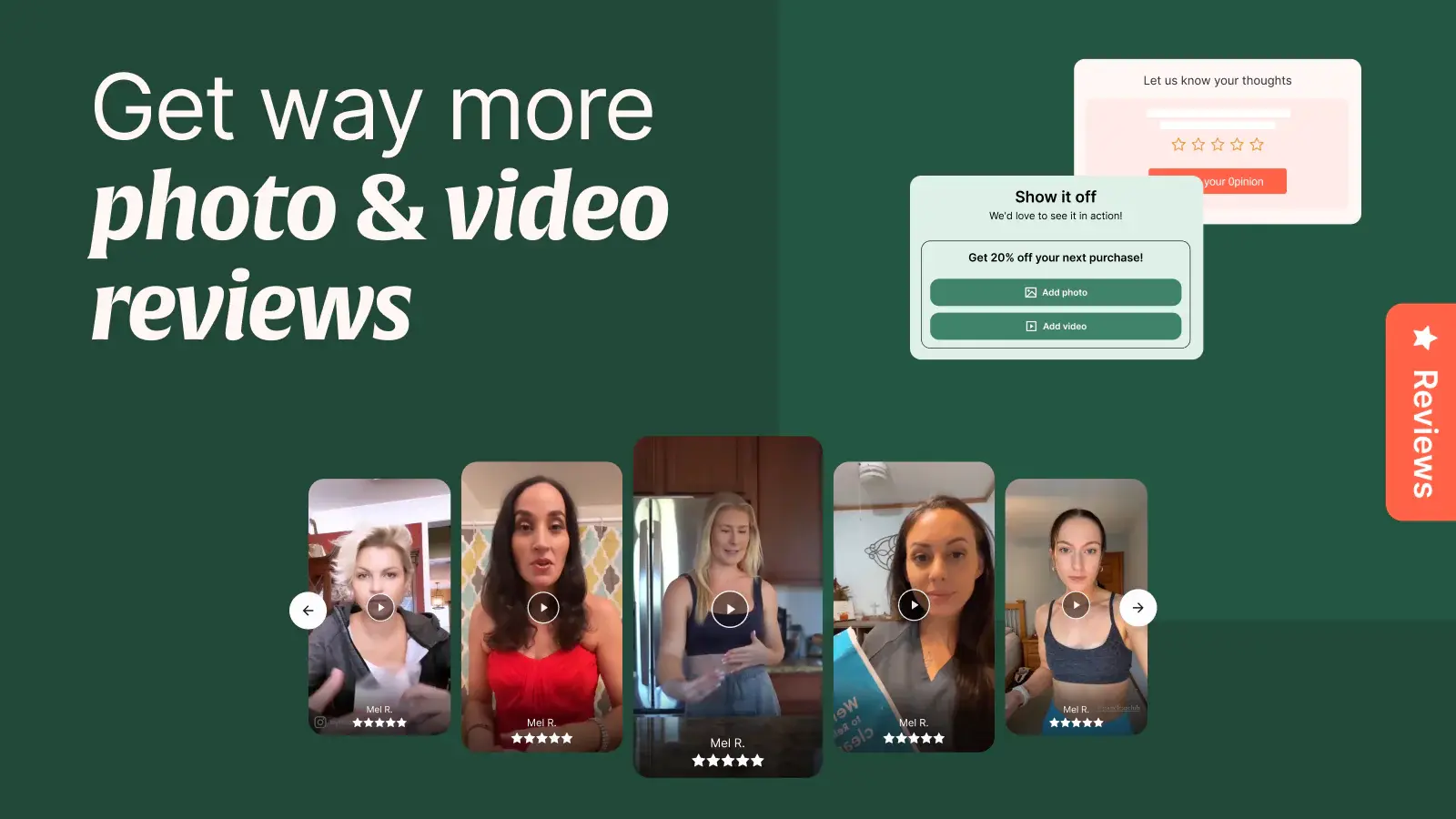
Best for: brands with photogenic products that want a polished photo-and-video review wall live fast.
Loox is the photo-first review app, built only for Shopify and installed on more than 130,000 stores. It automates the post-purchase request, nudges customers to add a photo or video, and renders the result in clean, on-brand galleries. It carries a 4.9 rating across roughly 8,000 App Store reviews, among the most-reviewed apps in the category, and it syndicates reviews out to Google, Meta, TikTok, and the Shop App so the content works in your ads too.
Pricing: Free and then from $49.99/mo, scaling with order volume (300 orders included in base price + $50 per additional 300 orders)
What works
- Among the best-looking review widgets available, designed to sell rather than just sit there.
- Strong photo and video collection through incentivized requests.
- Syndication that pushes your UGC into paid-ad and Shop App surfaces.
What doesn't
- No native loyalty or SMS, so you will add other tools for those.
- Order-volume pricing means the bill grows as you do.
Why it ranks fourth: For most brands whose products photograph well, Loox is the cleanest path to a review wall that earns its place, and the visual quality is the reason it leads this group.
5. Okendo
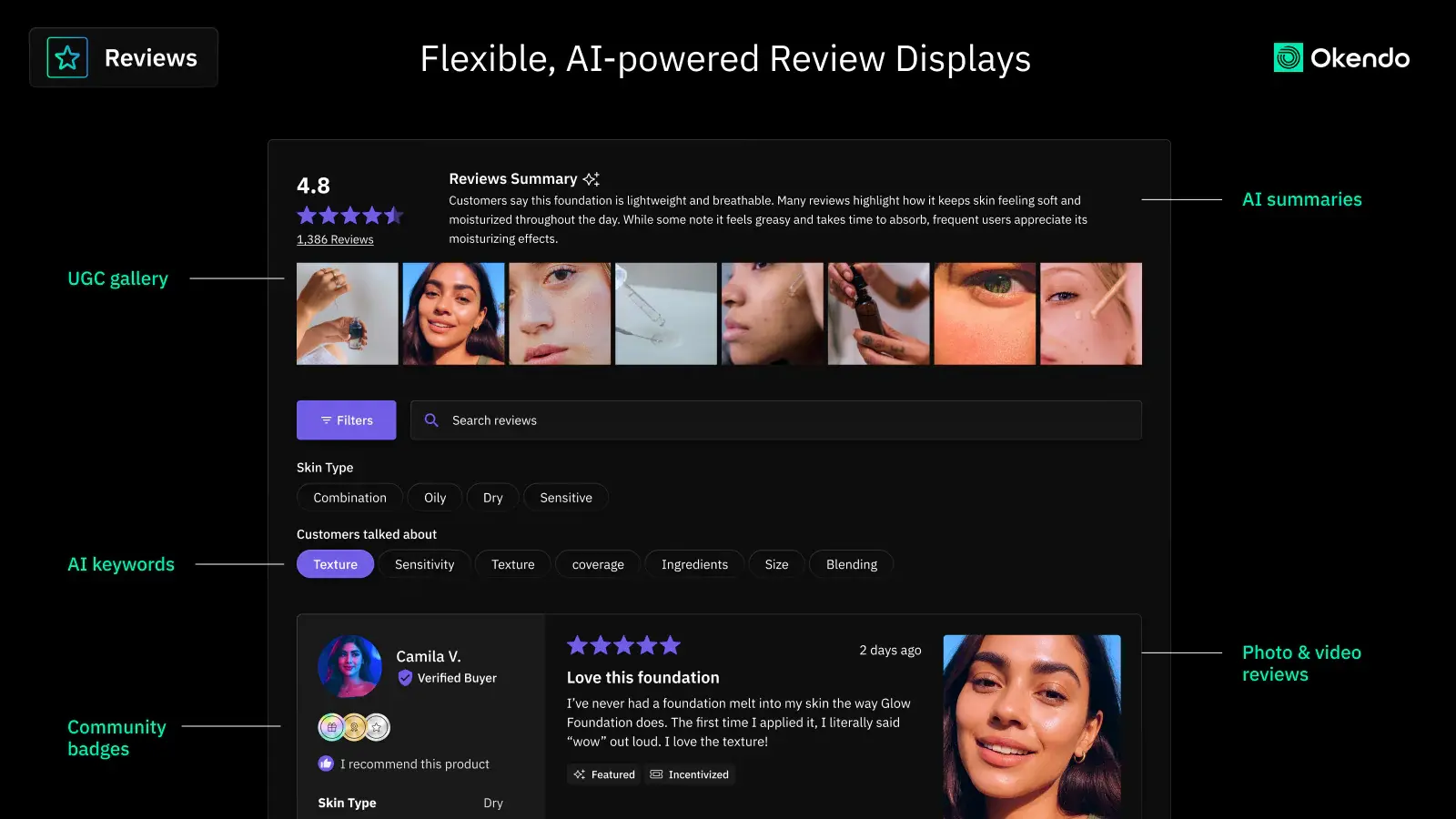
Best for: scaling brands that want reviews bundled with loyalty, quizzes, and surveys.
Okendo collects attribute-rich reviews (fit, skin type, use case) and pairs them with loyalty, quizzes, and surveys, so the same tool that gathers UGC also feeds segmentation and retention. It is a customer-marketing suite rather than a pure review app, and it is priced like one above the entry tier. It holds a rating near 4.9 across roughly 1,300 App Store reviews, and brands like Skims and Magic Spoon run on it. Shopify-exclusive, with a fast, mobile-first capture flow.
Pricing: Free up to 50 orders/mo; Essential $19/mo; Growth $119/mo; Power $299/mo, scaling with order volume.
What works
- Attribute-rich reviews you can segment on, not just stars.
- Reviews, loyalty, quizzes, and surveys under one customer record.
- Clean, fast widgets that do not drag page speed.
What doesn't
- Price climbs steeply with order volume, and the features you will want (Klaviyo sync, retail syndication) sit on higher tiers.
- More platform than a review-only brand needs.
Why it ranks fifth: Okendo is the right call when reviews are one piece of a broader retention plan. As a pure review tool it is more than most brands need, but as a reviews-plus-loyalty backbone it earns the spend.
6. Yotpo
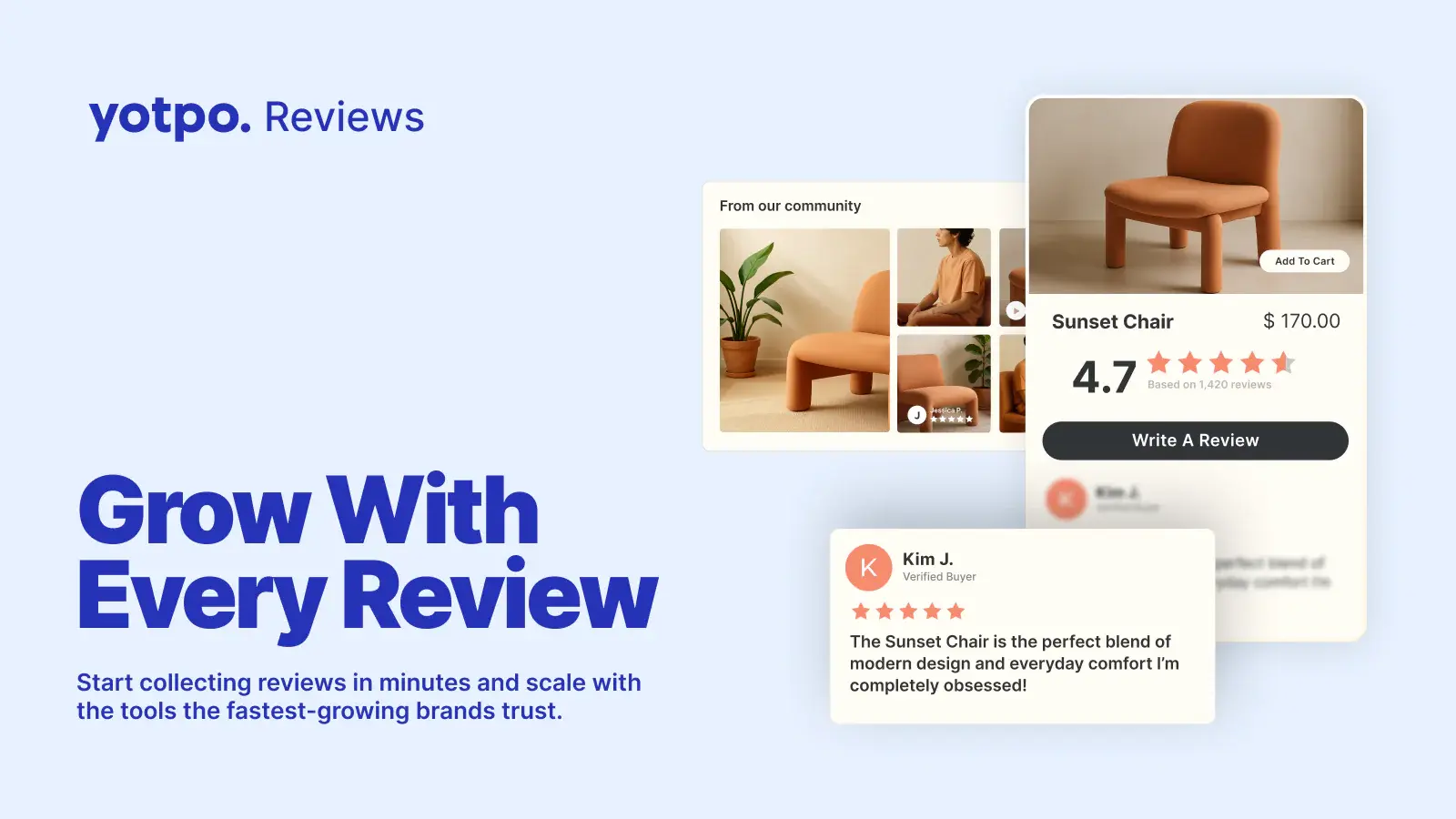
Best for: larger brands that want an established reviews-and-UGC suite with loyalty attached.
Yotpo is the enterprise-leaning veteran, a common fixture in Shopify Plus stacks. It covers reviews, visual UGC galleries, and loyalty, with syndication to retail partners. The reviews app holds a 4.8 rating across roughly 4,400 App Store reviews. Worth knowing for 2026: Yotpo narrowed its focus over the past year, sunsetting its subscriptions product and deprecating its SMS and email tools, so it is now centered on reviews and loyalty rather than the everything-suite it once was.
Pricing: A free reviews tier exists (up to 50 orders/mo). Paid reviews plans start around $15/mo, for the Starter plan and $119 for the Pro plan.
What works
- A mature, battle-tested platform that scales to large catalogs.
- Reviews, visual UGC, and loyalty without juggling several vendors.
- Retail syndication for brands that sell through partners as well as DTC.
What doesn't
- Pricing above the free tier turns opaque fast, and total cost can run high.
- The recent product cuts mean it is no longer the all-in-one some brands remember.
Why it ranks sixth: Yotpo fits brands consolidating reviews, UGC, and loyalty into one established vendor and willing to work with quote-based pricing. If you only need reviews, leaner tools higher on this list cost less.
7. Foursixty
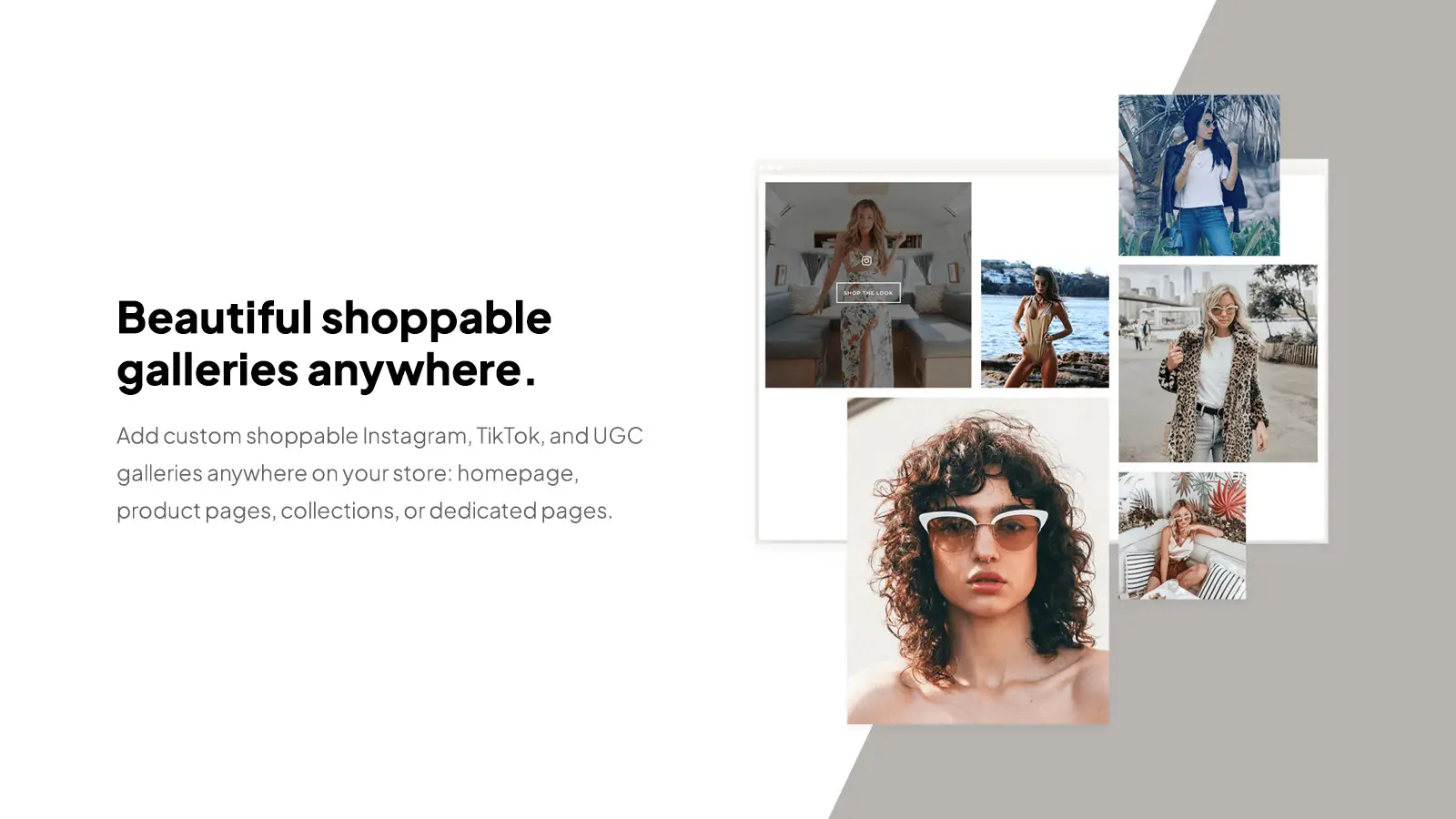
Best for: brands that want shoppable Instagram, TikTok, and ambassador galleries on-site and in email.
Foursixty is the social-gallery specialist, trusted by more than 2,000 brands. It turns Instagram, TikTok, and ambassador posts into shoppable galleries for your product pages, homepage, landing pages, and email, handles UGC rights requests, and tracks revenue by creator and campaign. It carries a 4.9 rating on the App Store and is a Shopify Certified App Partner. Where review apps collect content from your post-purchase flow, Foursixty pulls in the social content your community is already posting.
Pricing: From around $90/mo for the Essential plan, $300 for the Complete plan and $500 for Complete plus. All plans include a 14-day free trial.
What works
- Purpose-built shoppable social galleries that look native to your store.
- UGC rights management, so you feature social content legally.
- Creator and campaign attribution that ties content to revenue.
What doesn't
- Pricing runs higher than basic Instagram-feed apps, and key features gate to the upper tier.
- It is social-gallery focused, so it complements a review app rather than replacing one.
Why it ranks seventh: Foursixty is the pick when your community already posts about you on social and you want that content shoppable on-site. It rounds out the display category that review apps do not cover.
Best platforms for sourcing creator UGC video
This is a different job from everything above. You are not displaying what customers already made; you are commissioning new video from creators to run as ads or organic posts. Demand for that content is real (86% of shoppers told Bazaarvoice they engage with creator content before buying), but the economics work differently, so price the model rather than the sticker. Across the market, a single UGC video deliverable averages around $198, and marketplaces typically take a 20-to-30% cut on top, per 2026 creator-pricing data.
8. Billo
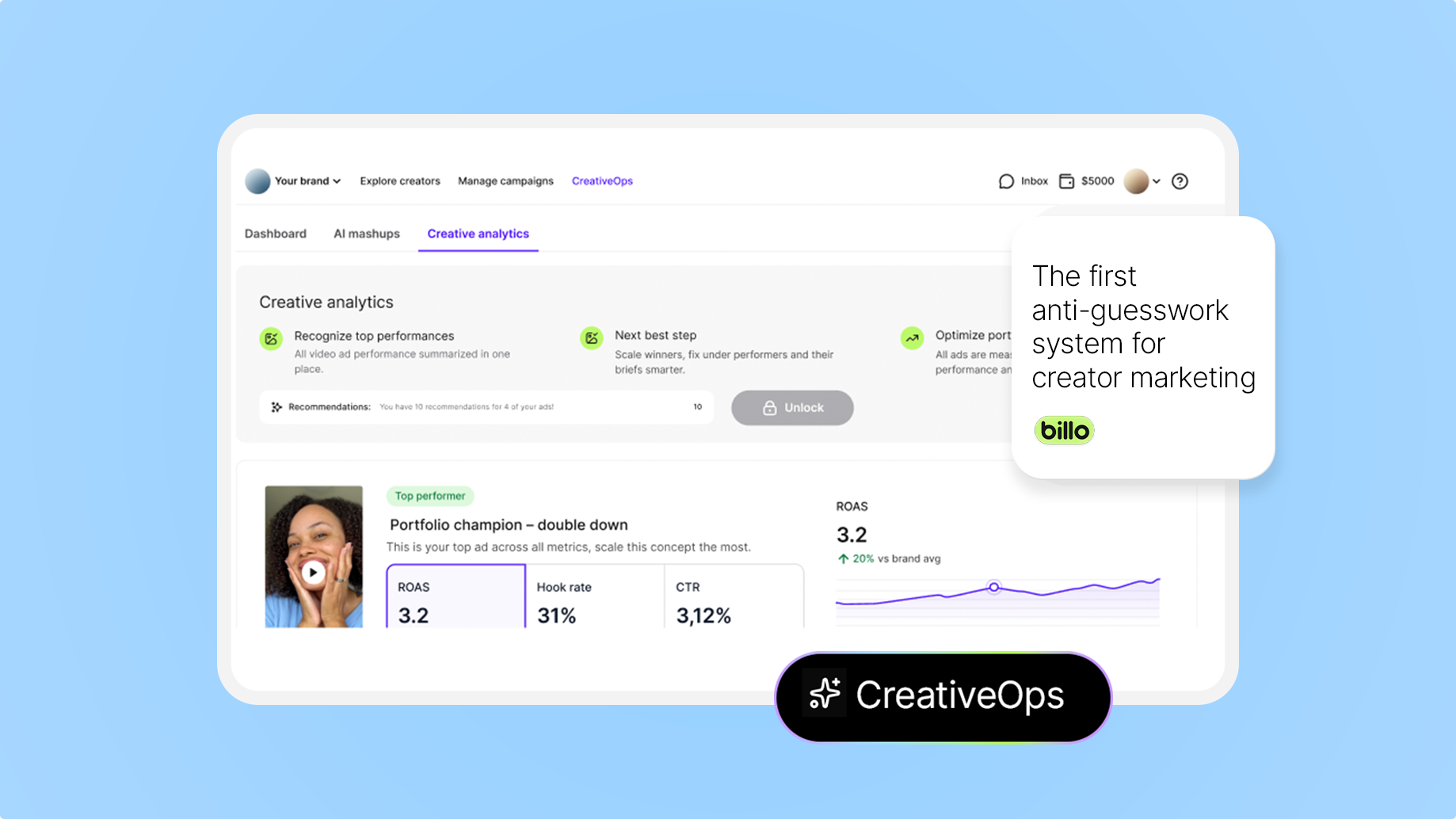
Best for: brands that want affordable, repeatable UGC video for paid social.
Billo is the cheap, fast end of the market. You brief it, creators from its pool of 5,000-plus film, and you get branded video back in a few days, platform fee included. The output is content; you run the ads yourself. It is built for a steady drip of test creative without an enterprise contract.
Pricing: From around $99 per video, no subscription required, with bulk discounts for larger orders.
What works
- Low entry cost and fast turnaround, with video back in days.
- Simple briefing and no monthly commitment.
- Built for repeatable volume when you are testing creative.
What doesn't
- Output quality tracks how good your brief is.
- Content only, so you still run and pay for the media.
Why it ranks first among marketplaces: For a brand starting a UGC-video habit, Billo is the lowest-friction way to test creative at volume.
9. Insense
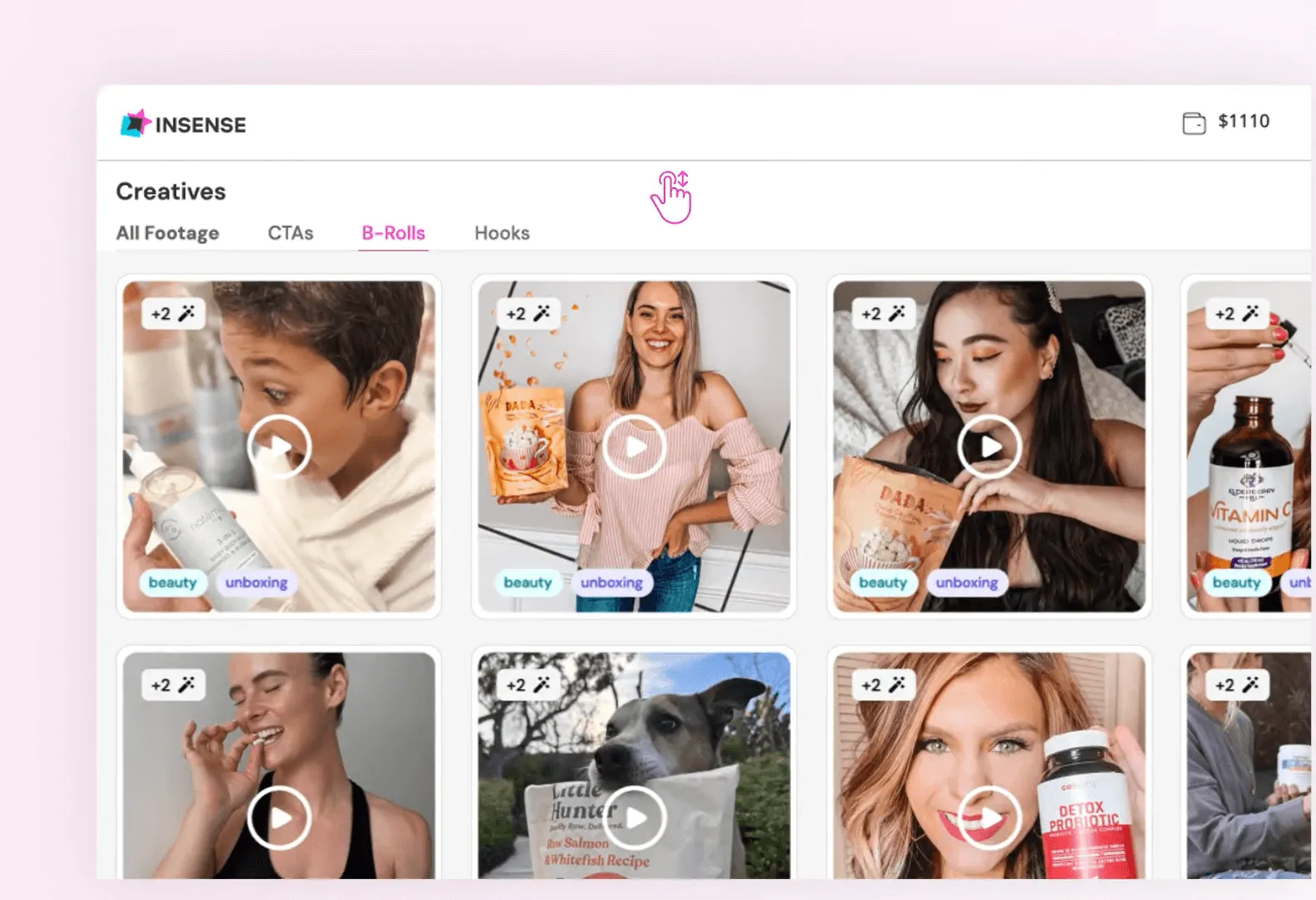
Best for: brands that want UGC video plus paid-social whitelisting in one place.
Insense goes a step past content into whitelisting and Spark Ads, so creator video can run from the creator's own handle, which matters for paid social. It is built for Shopify and includes a creator CRM for managing relationships rather than one-off buys. It is priced accordingly.
Pricing: From around $650/mo for the Trail plan, $500/mo for the Brand plan and finally, $800/mo for the agency plan.
What works
- Whitelisting and Spark Ads to run video natively from creator accounts.
- Shopify integration and a creator CRM for ongoing relationships.
- Useful when creator content is part of a real paid-social plan.
What doesn't
- Pricier than per-video marketplaces once platform and creator costs combine.
- More of a platform to learn than a single transaction.
Why it ranks second among marketplaces: Insense earns the higher cost when whitelisting is part of the plan. For raw video alone, Billo is cheaper.
10. Minisocial
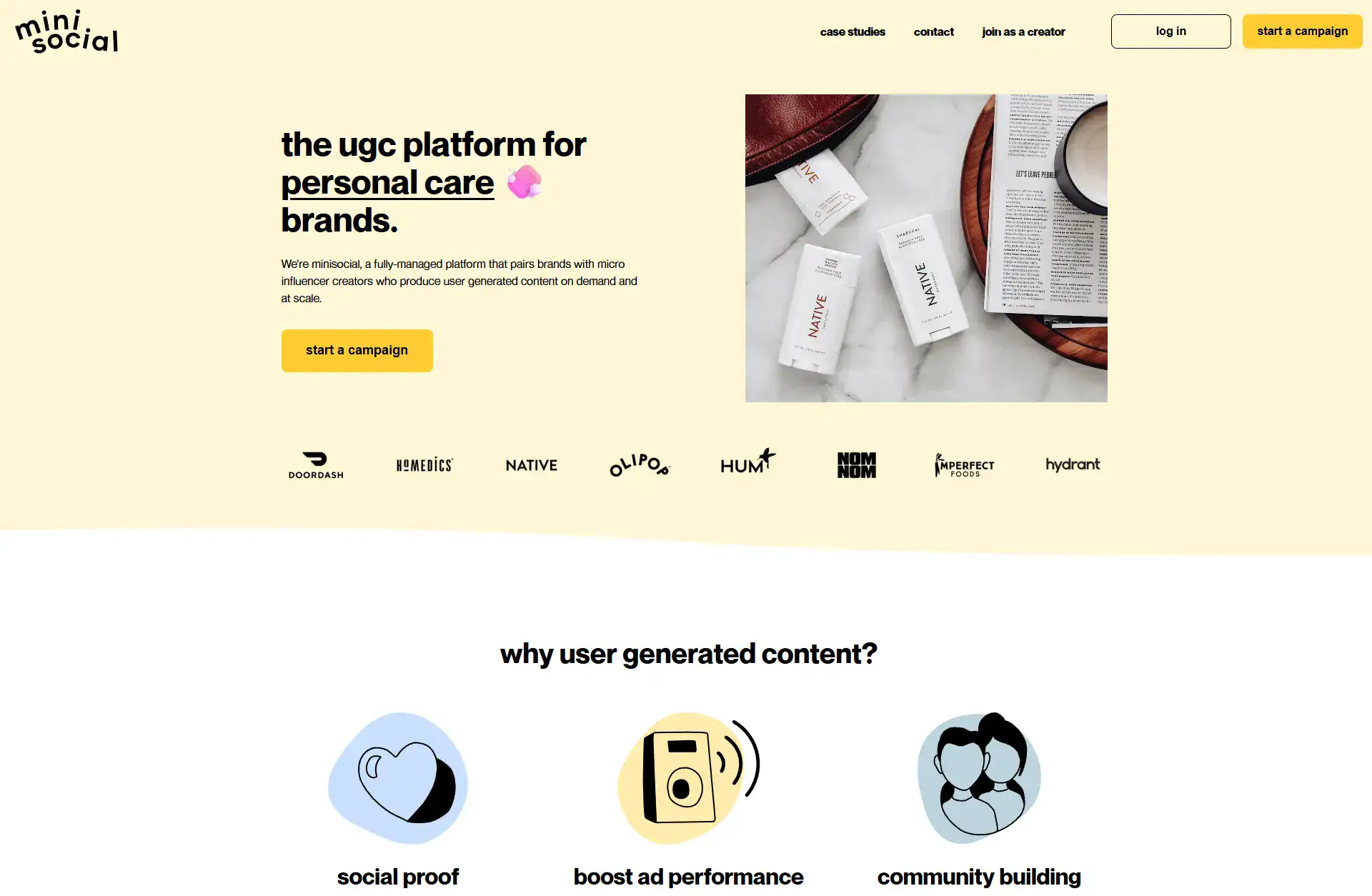
Best for: brands that want fully managed micro-influencer UGC, licensed, with organic reach included.
Minisocial is the managed end. It matches you with micro-influencers who make the content and post it to their own audiences, and you get fully licensed assets plus the organic reach as a bonus. It handles briefing through delivery, so it suits small or busy teams that want UGC without running the campaign themselves.
Pricing: Project-based, from roughly $2,500 to $3,000 for a campaign (creator fees included), with no long-term contract.
What works
- Fully managed end to end, from brief to delivery.
- Full usage rights baked into the price, with no per-creator licensing math.
- Creators post to their own audiences, so you get organic reach alongside the assets.
What doesn't
- Highest entry cost in this group; it is a project, not a cheap test.
- You do not pick creators directly; matching is handled for you.
Why it ranks third among marketplaces: Minisocial is the choice when you want licensed UGC and organic distribution without managing creators. For lean, cheap testing, Billo is the other end of the spectrum.
How to choose the right Shopify UGC app
Start with the bucket, then the job within it.
- Videowise if you want video to be a real channel and need it to scale.
- Novel if you want a clean, fast video widget on a few key pages.
- Hue if you are a beauty or skincare brand that needs representative creator video and does not have it yet.
- Loox if your products photograph well and you want a polished review wall fast.
- Okendo if reviews are part of a bigger loyalty and retention plan.
- Yotpo if you are consolidating reviews, UGC, and loyalty into one established vendor.
- Foursixty if your community posts about you and you want that social content shoppable.
- Billo if you need cheap, repeatable creator video for ad testing.
- Insense if you want creator video plus whitelisting for paid social.
- Minisocial if you want managed micro-influencer UGC with rights and organic reach included.
Most brands end up running one display tool and, later, one sourcing tool: collect proof from the customers you have, then commission video to reach the ones you don't.
The part that the ranking can't decide for you
A list can tell you which tools are good. It cannot tell you which one will lift conversion on your store, because that depends on your products, your traffic, and where you put the content. The same shoppable video row that adds double-digit conversion for one brand barely registers for another, and a heavy widget that slows your product page can quietly cost more than the UGC earns.
This is the gap Shoplift fills. Shoplift is the A/B testing and CRO platform built for Shopify, and the only one built for Shopify Plus brands, so you can put a UGC widget in front of a slice of real traffic, measure what it does to conversion and revenue per visitor against a clean control, and roll it out only if the numbers hold. It is no-code, native to your theme, and built so testing does not cost you page speed. And because one test rarely settles the UGC question on its own, Campaigns lets you run the evaluation as a program: group the tests that share a goal (a video row on the PDP, a review wall placement, a gallery on the homepage) behind the one metric you are trying to move, and read the results as a body of work instead of a scatter of one-off wins. We have run these tests across UGC placements for Shopify brands and watched the same content lift conversion on one store and do nothing on another, which is the entire argument for testing before you commit.
Pick a tool from the shortlist above, then test it on your own store before you scale the spend. Start testing with Shoplift.
Frequently asked questions
What is a UGC app for Shopify?
A UGC (user-generated content) app helps a Shopify store collect, display, or source content made by real people rather than the brand. In practice that splits into three jobs: shoppable-video apps that put customer and creator video on your store, review and gallery apps that display customer reviews and social posts, and creator marketplaces that produce new video for ads. They solve different problems at different points in the funnel.
Which UGC format converts best on Shopify?
Video has the most direct link to conversion right now. In Wyzowl's 2026 survey, 85% of people said a video has convinced them to buy, and 63% said they would rather learn about a product through a short video than through text or images. The format that converts best on your specific store still depends on your products and audience, which is why testing a placement beats assuming.
What is the best free UGC app for Shopify?
Several have real free tiers. Okendo and Yotpo both offer free plans up to 50 orders a month, and Judge.me (a widely used review app outside this list's top 10) runs a genuinely usable free plan with no order cap. For shoppable video, most apps start with a free trial rather than a permanent free tier.
How much does a UGC app cost?
It depends on the job. On-site review and video apps run from about $10 to $20 a month at entry and scale with order volume or impressions. Creator video is priced differently: roughly $99 per video on the low end, managed monthly plans from around $500, and fully managed micro-influencer projects from about $2,500. Match the pricing model to your volume, since the model is what bites at scale.
Do UGC apps slow down a Shopify store?
They can, especially video and photo widgets loading on a large catalog. The better apps use lazy-loading and compression to limit the hit, and several publish their page-speed approach. Because load time affects both SEO and conversion, test your Core Web Vitals before and after installing any UGC widget.
Is a review app the same as a UGC app?
A review app is one kind of UGC app. It collects and displays content your existing customers make. Other UGC apps source brand-new creator video for ads, or put shoppable video on your product pages. All three are UGC; they just sit at different points in the buying journey.
Should I use a shoppable-video app or a creator marketplace?
Use a shoppable-video app when you want video working on your own store to lift on-site conversion. Use a creator marketplace when you need fresh video to run as ads or organic social. Many brands eventually use both: one to convert the traffic they have, one to reach traffic they don't.
How do I know if a UGC app actually increases my conversion rate?
Test it. Run the UGC placement as an CRO test against a control version of the page, send real traffic to both, and compare conversion rate and revenue per visitor. A tool's case studies show what is possible for other brands, not what will happen on yours, so a controlled test on your own store is the reliable way to know.
Subscribe to the Shoplift newsletter
Get insights like these emailed to you bi-weekly!
{{hubspot-form}}


