
How HAIRtamin Used Shoplift Price Testing to Turn TikTok Momentum into Sustainable, Confident Growth

The Viral Product Dilemma
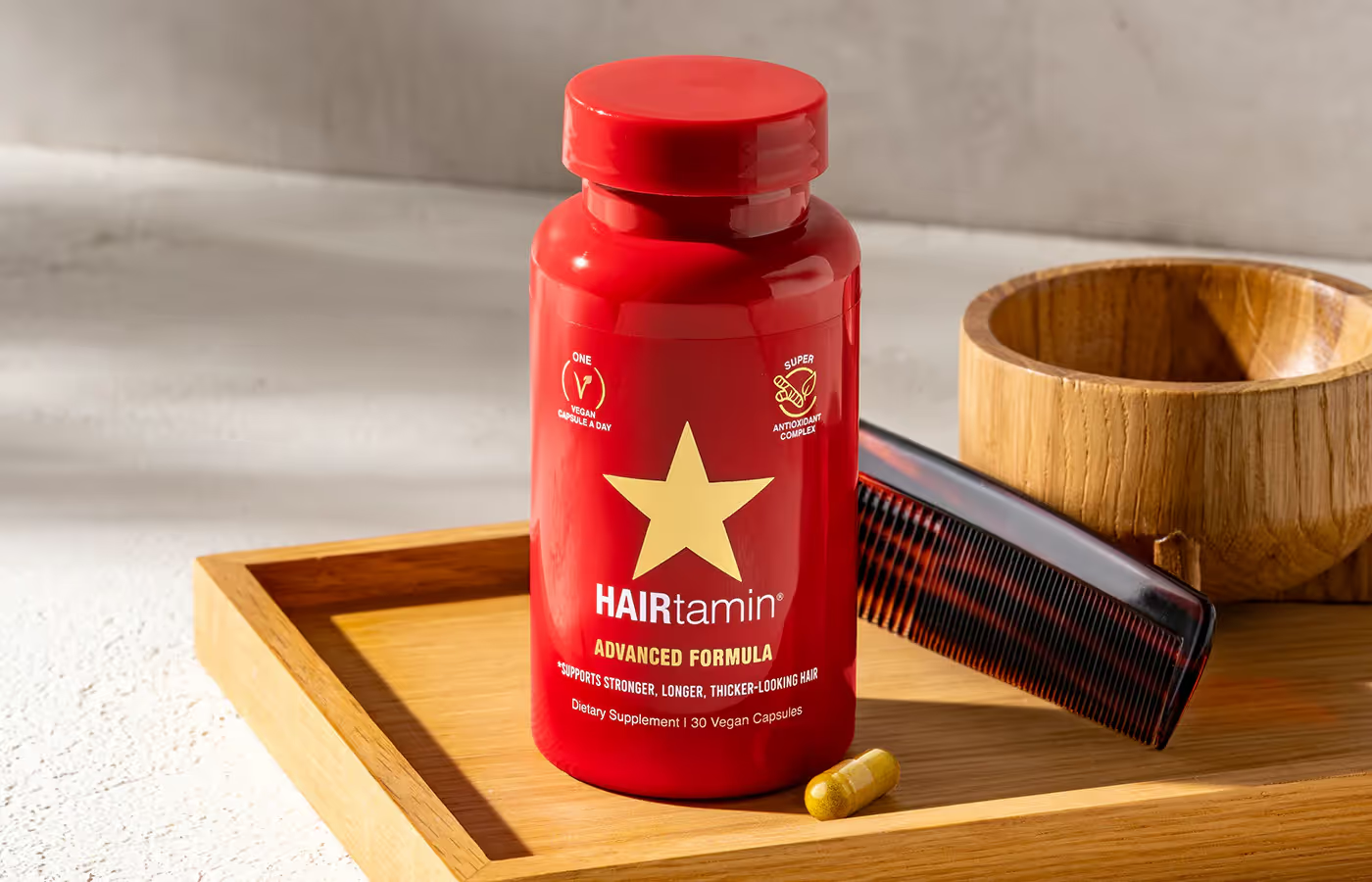
HAIRtamin had built a reputation selling premium hair supplements and wellness products, carefully optimizing their pricing over years of steady growth. When their Miracle Brush went viral on TikTok, the sudden traffic surge created a new challenge.
As a supplements company, HAIRtamin's pricing expertise centered on their core product category. The Miracle Brush represented a different business model, with different cost structures, customer expectations, and competitive dynamics than their supplement line. Sam, HAIRtamin's marketing lead, recognized the opportunity for brand awareness, but also needed to figure out the right pricing approach for a product category they were still learning. The brush had been priced conservatively from launch, and with demand increasing significantly, the economics needed adjustment. Rising COGS and overhead costs meant they needed to test a price increase quickly, but they couldn't risk damaging conversion rates during this high-traffic period.
"We understood it was at a kind of delicate price point," Sam explained. "We needed to really test raising the price to make sure we don't mess any of the virality up or any of the conversion rate on the site."
Sam had been working with Nebula Dept., a Shopify agency specializing in conversion optimization and theme development, to help grow their brand and perfect their storefront. When the pricing question came up, they explored available options but found the existing solutions more complex than anticipated.
The Complexity Wall
Like many growing Shopify brands, HAIRtamin had evaluated Intelligems as a solution for price testing. They'd installed it months earlier, hoping to use data to optimize their pricing strategy across their product line.
The implementation proved more challenging than expected. Sam found the visual editor overlay difficult to work with, and setting up tests seemed to require more technical expertise than his team had readily available. After several attempts to configure a straightforward price test, he decided to focus on other priorities.
"Intelligems [price testing] tool was just not user friendly," Sam commented. "The lift was actually kind of hard to get any price test going and I just kind of gave up."
HAIRtamin continued making pricing decisions based on market research and competitive analysis rather than direct customer testing. This approach worked during steady growth, but with the Miracle Brush gaining significant traction on TikTok, they needed actual customer data to make confident pricing decisions under time pressure.
Sam had been working with Shoplift for other A/B testing needs and saw that they'd launched price testing in beta. He requested access and within days their ecommerce agency Nebula began the implementation process.
Implementation in Days, Not Months
The setup process differed notably from their previous experience. Where Intelligems relied on JavaScript overlays, Shoplift's approach involved a one-time theme integration by Nebula's developers, followed by straightforward test configuration through Shoplift's interface.
The efficiency extended beyond installation. Once Nebula completed the technical integration, launching the actual price test was direct. Sam could see exactly what he was testing: current price versus proposed price, without complex visual editors or code snippets.
"Here's the current price and here's the price I want to test and [I] just hit live," Sam explained. "That's phenomenal."
For the Miracle Brush test, HAIRtamin wanted to increase the price by a few dollars to improve their unit economics during the viral period. The key question was whether customers discovering them through TikTok would maintain conversion rates at the higher price point.
Within days of implementation, Shoplift began collecting data. Sessions, conversion rates, revenue per visitor all flowed into Shoplift's dashboard automatically, providing clear visibility into how customers responded to the price change.
The Confidence That Comes from Real Data
The results came in steadily. The data showed that customers continued buying the Miracle Brush at the higher price point. Conversion rates dipped slightly (around 2%), but revenue per visitor increased meaningfully. The viral TikTok traffic proved less price-sensitive than HAIRtamin had anticipated.
"We were able to prove out that we could make this small price increase without hurting conversion," Sam noted. "The difference was very little in terms of conversion rate decrease."
The improved unit economics meant HAIRtamin could profitably scale their TikTok success. Instead of managing margin compression while amplifying the viral content, they had confidence the numbers would support increased spending.
HAIRtamin implemented the winning price across their store and increased their media spend on the Miracle Brush. What had been an uncertain pricing decision became a proven, scalable approach. The data provided the foundation for aggressive growth investment.
The impact showed up in their monthly metrics. HAIRtamin had set ambitious December revenue goals based on the product's momentum. With optimized pricing driving better unit economics, they hit those monthly targets within the first ten days of December.
From Pricing Crisis to Growth Strategy
The Miracle Brush price test represented a shift in HAIRtamin's approach to pricing optimization. What began as an urgent response to a viral moment became a repeatable methodology for making confident pricing decisions. Shoplift compressed what could have been months of cautious price experimentation into days of data-driven learning. Sam and his team now had a tool that matched their operational needs: efficient setup, clear data, actionable results. The complexity that had prevented progress with Intelligems wasn't present with Shoplift's approach.
HAIRtamin moved from reactive pricing decisions to proactive testing. They're now exploring bundle pricing strategies to move Miracle Brush customers into HAIRtamin's core supplement line. The confidence gained from successful price testing enabled new strategic opportunities.
Shoplift's approach (Shopify-native integration, straightforward test configuration, automatic data collection) reduced installation friction and provided consistent, actionable pricing information. For HAIRtamin, it meant the difference between postponing price testing and making confident, data-backed decisions that directly impacted their growth trajectory. The results demonstrate the value: a viral product moment supported by sustainable, scalable revenue growth because pricing decisions were based on actual customer behavior rather than assumptions.


